-
Whole-child approach in PEEssay/Education Essay 2024. 3. 17. 13:05
I am making a whole-child physical education program for high school students.
Whole-child approach is essential in PE.
a. Human beings live in the flesh. All moments of our lives are physical education.
- Sport, exercise, dance, leisure activity, or even meditative physical activity.
b. Any one part is not more important than others, whatever frames are used.
- Motivation, confidence, physical competence, and knowledge in Physical Literacy; cognitive, affective, and psychomotor in Bloom's taxonomy; Academic, social, and emotional learning
c. High school is the last required period in which students officially take physical education.
- A holistic approach is even more essential to a required course. Because high school students have experienced a variety of physical activities in their personal and cultural contexts. Based on the core concepts in human movements (i.e., Kinesiology), students should learn and reflect on physical activities.Setting a whole-child purpose can often mean redefining historic notions about the outcomes that schools aim to achieve. Academic success is one important outcome, but equally critical is creating educational experiences that build students’ essential cognitive, social and emotional skills and mindsets, develop their identities and self-worth, and remove barriers to healthy development, learning and thriving.
(Turnaround for children, 2021)Fortunately, some organizations have put efforts into building whole-child development at a school (or county, district, or state) level. As it is important at a school level, I argue that practice at a subject level should understand and emphasize principles and strategies. In this sense, my efforts in this program are to create a program to serve students as whole children in physical (and health) education.
https://turnaroundusa.org/toolbox/wcdesign/Toolbox | Whole-Child Design - Center for Whole-Child Education (Turnaround for Children)
Turnaround’s Whole-Child Design Blueprint is a framework for transformational change, grounded in science - taking the most important lessons across many bodies of research on how kids really learn and develop and making them actionable in any classroom,
turnaroundusa.org

https://www.wholechildpolicy.org/
Whole Child Policy Toolkit
The Whole Child Policy Toolkit gives state policymakers and education leaders a set of strategies, tools, and resources to advance whole child policy.
www.wholechildpolicy.org
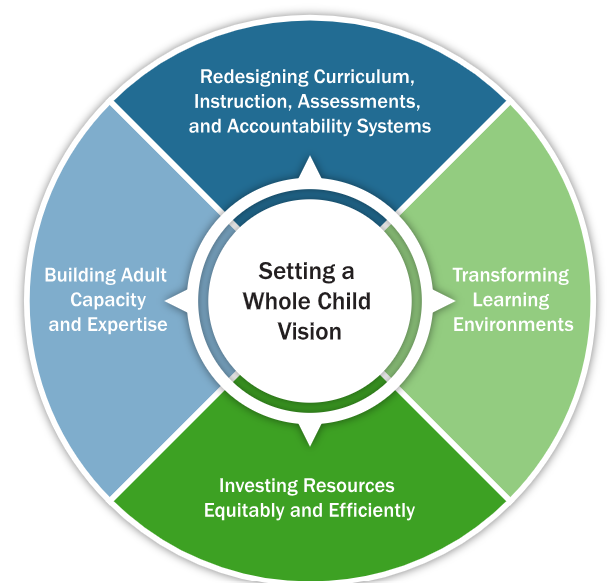
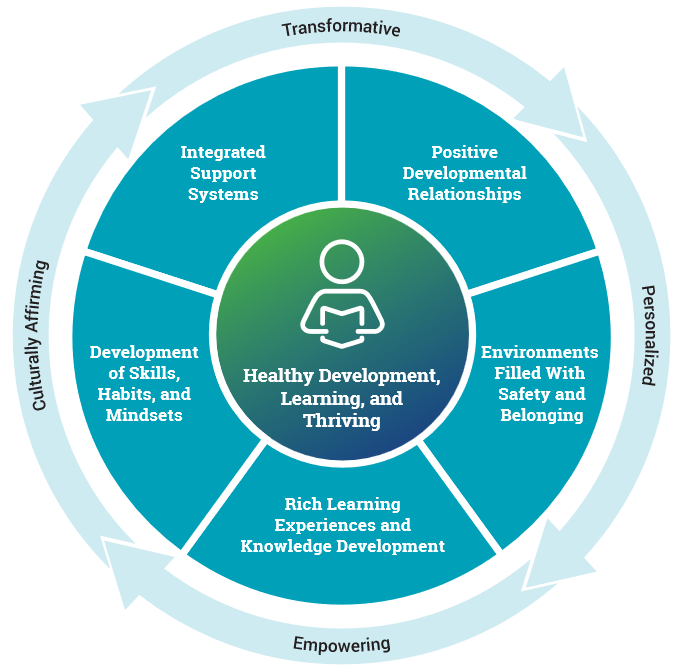
Learning Policy Institute & Turnaround for Children. (2021). Design principles for schools: Putting the science of learning and development into action . Cantor, P., & Osher, D. (Eds.). (2021). The science of learning and development: Enhancing the lives of all young people. Routledge.
Darling-Hammond, L., Flook, L., Cook-Harvey, C., Barron, B., & Osher, D. (2020). Implications for educational practice of the science of learning and development. Applied Developmental Science, 24(2), 97–140. https://doi.org/10.1080/10888691.2018.1537791
Osher, D., Cantor, P., Berg, J., Steyer, L., & Rose, T. (2020). Drivers of human development: How relationships and context shape learning and development. Applied Developmental Science, 24(1), 6–36. https://doi.org/10.1080/10888691.2017.1398650